Curiosity deserves clarity.
Peptides are everywhere in the conversation. Reliable context should be, too. Explore the science, understand the evidence, and make room for better questions.
Small chains.
Big conversations.
Peptides are chains of amino acids. Some are made by the body. Some are developed into medicines. Others remain early research subjects. The word “peptide” tells you what a molecule is made of, not whether a claim about it is proven.
Learn how to evaluate a claimLook closer.
 ILLUSTRATION · NOT A PRODUCT
Insulin
What it is: A peptide hormone produced by the pancreas that helps move glucose from the blood into cells.
Read the breakdown ILLUSTRATION · NOT A PRODUCT
Semaglutide
What it is: A peptide-based prescription medicine with FDA-approved products for specific conditions.
Read the breakdown ILLUSTRATION · NOT A PRODUCT
BPC-157
What it is: Frequently discussed online for recovery, with insufficient human safety and effectiveness evidence for those claims.
Read the breakdown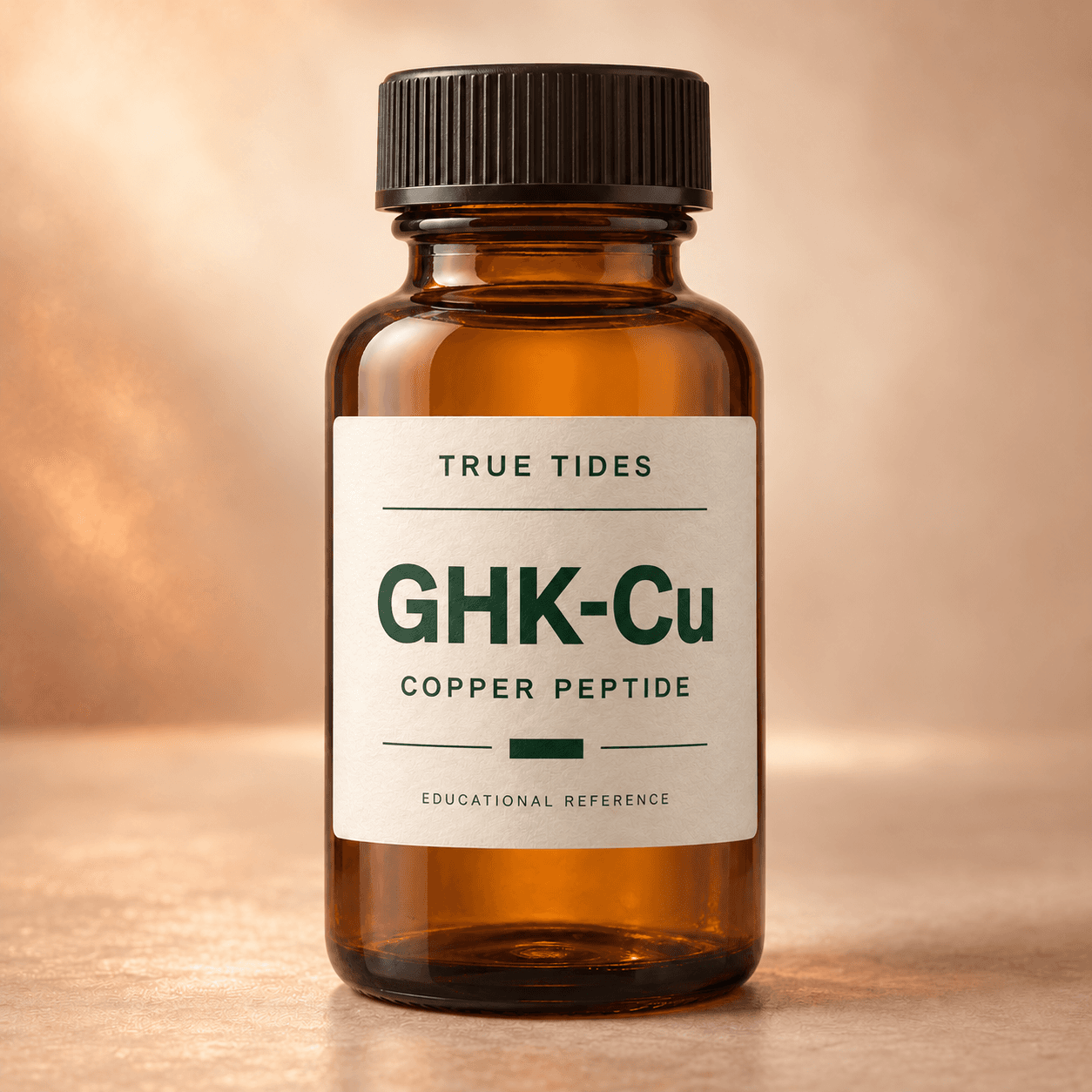 ILLUSTRATION · NOT A PRODUCT
GHK-Cu
What it is: A peptide–copper complex studied in laboratory and cosmetic contexts; injectable use raises distinct safety questions.
Read the breakdown ILLUSTRATION · NOT A PRODUCT
Retatrutide
What it is: An investigational medicine that acts on GIP, GLP-1, and glucagon receptors; it has not been approved for public use.
Read the breakdown ILLUSTRATION · NOT A PRODUCT
NAD+
What it is: A coenzyme involved in cellular energy reactions. NAD+ itself is not a peptide, and wellness claims need careful review.
Read the breakdown